Rockwell Automation: eProcurement Platform
Embedded as a UX consultant via Globant
Led end-to-end UX for B2B e-commerce platform, where user research directly shifted product direction, including greenlight of a new Repair Services feature I proposed based on customer interviews.
Role: Lead UX Designer | Duration: 16 months | Team: Cross-functional(20 people) | MVP Launch: 3 enterprise clients
New feature
Repair Services greenlit for development—proposed from research insights
Research & action
Major research insights directly changed product requirements
Pattern library
Pattern library built, improving consistency and accelerating delivery
The problem
Business context
Rockwell Automation, a global leader in industrial automation, needed to build its internal eProcurement platform—a secure, closed B2B system for partners to order hardware, software, and services. Unlike consumer e-commerce, this platform required robust permissions, integration with legacy systems, and a UX that could serve engineers, factory operators, and managers with very different needs.
User pain point
Enterprise procurement can be notoriously clunky. Users were accustomed to consumer-grade experiences like Amazon in their personal lives, but forced to navigate confusing enterprise systems at work. They needed to find parts quickly, understand availability, and track deliveries—without decoding internal jargon or calculating dates manually.
Critical insight
User interviews revealed that Amazon was the first brand users associated with e-commerce. They weren't comparing us to other B2B platforms—they were comparing us to the best consumer experience they knew. This reframed our entire approach: we weren't just building an eProcurement tool, we were competing with consumer expectations in an enterprise context.
Research that changed product direction
Insight: Repair services feature
What we heard: In some cases Users were more interested in repair services than buying new products. Their equipment wasn't being upgraded, but they still depended on Rockwell parts—some of which were discontinued but still critical to their operations.
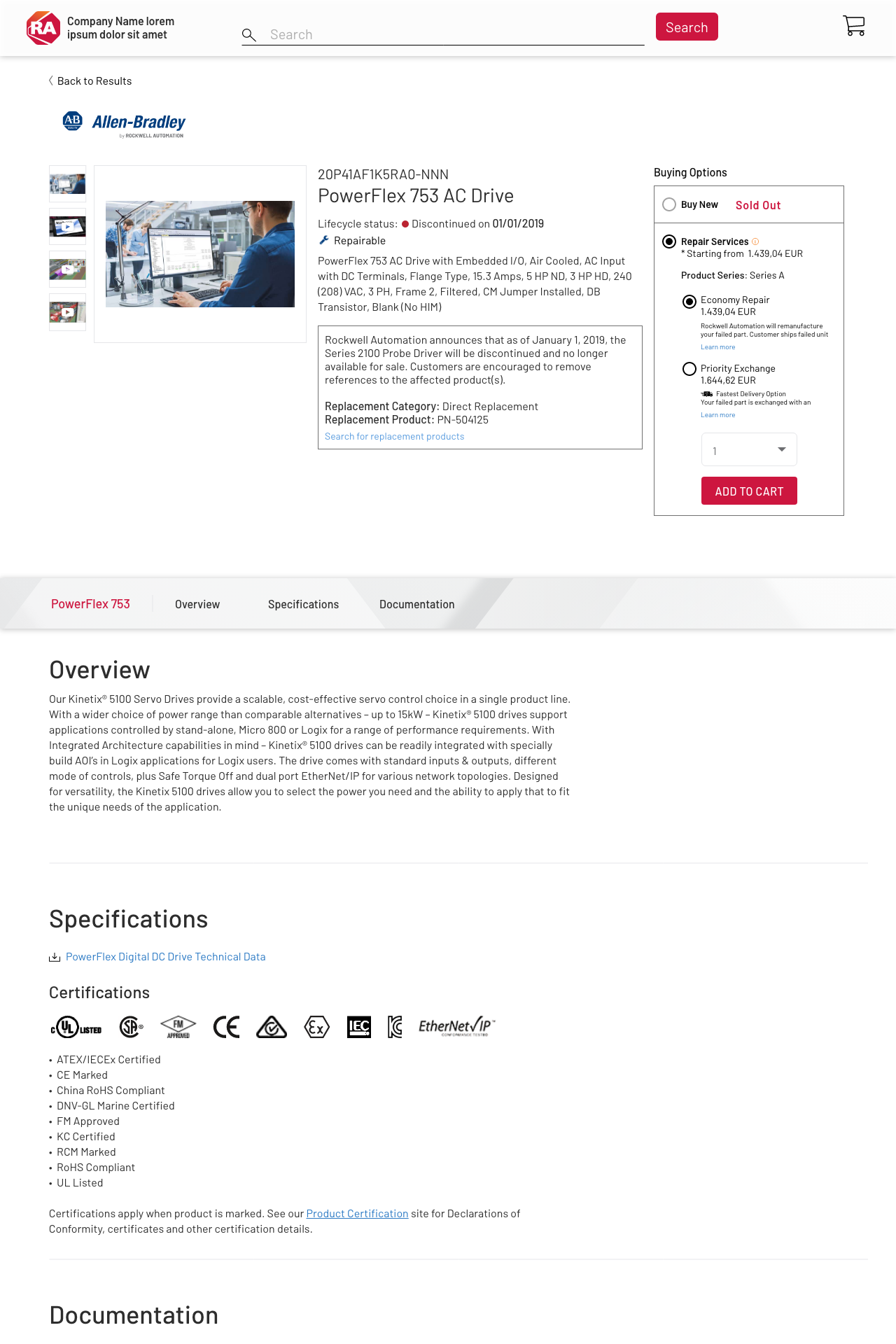
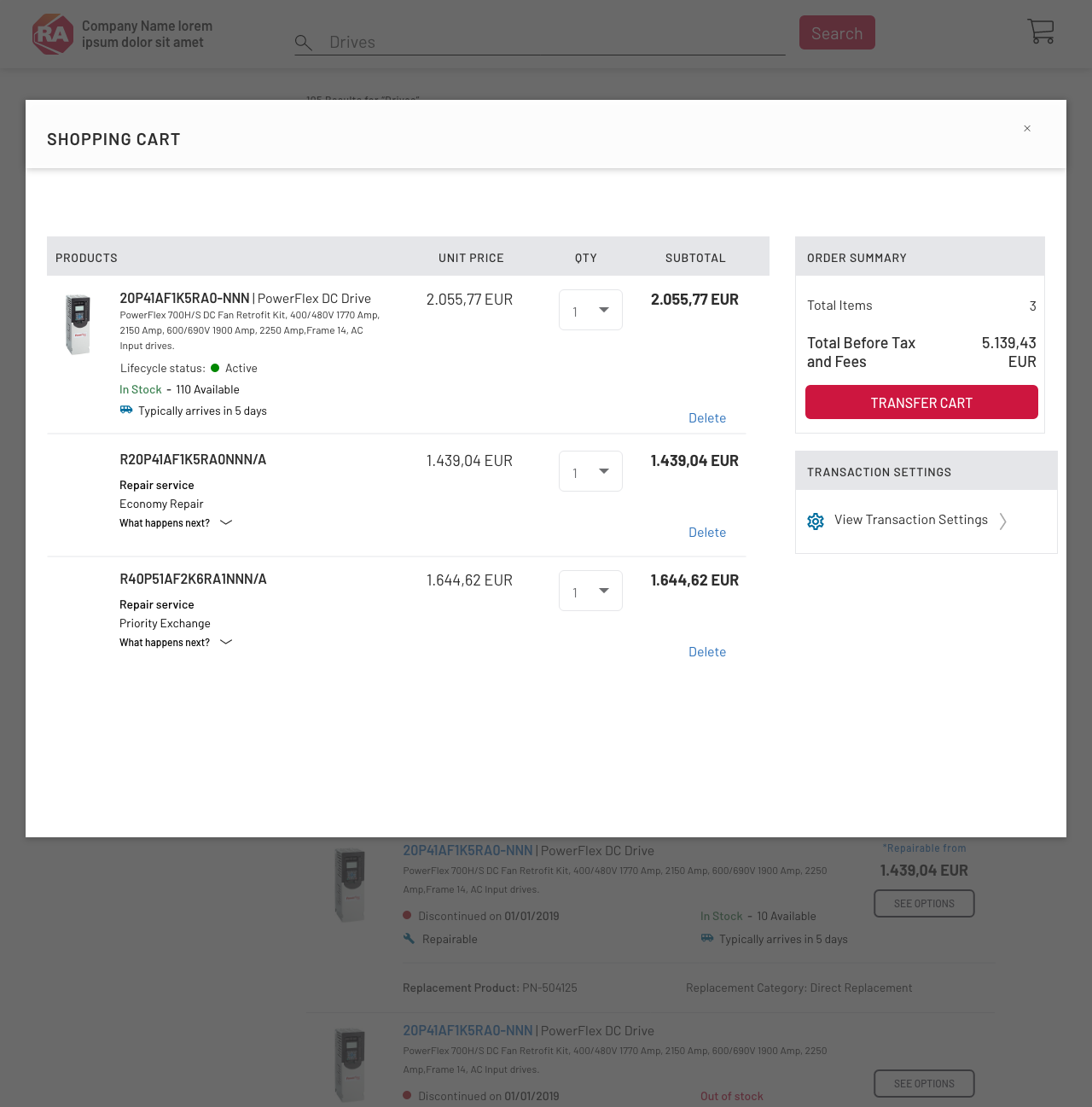
What changed: Stakeholders prioritized product requirements and design explorations for Repair Services as a new offering within the platform. I proposed and designed this feature, delivering wireframes and prototypes that were greenlit for development.
Insight: Refurbished products opportunity
What we heard: Users expressed interest in buying refurbished products from Rockwell—an option that didn't exist on the platform.
What changed: This insight was logged for future roadmap consideration, expanding the potential product catalog beyond new items.
Insight: Delivery date vs. lead time
What we heard: Users wanted a specific delivery date, not a lead time. Rockwell assumed users wanted lead time, but users found it complicated—they didn't want to calculate arrival dates themselves. They wanted a date they could track in real time.
What changed: Product requirements shifted from showing lead times to showing exact delivery dates with real-time tracking.
Insight: Simplify terminology
What we heard: Usability testing revealed confusion around internal terminology for product status, availability, and delivery dates.
What changed: We simplified and standardized terminology across the platform, reducing cognitive load and aligning language with user mental models.
Strategic approach
Key constraints
Tight MVP deadline and delivery timeline.
Legacy system integrations that limited technical flexibility.
Stakeholder mindset initially focused on features over user-centered priorities.
Large cross-functional team (20 people) requiring alignment across disciplines.
Trade-offs and decisions
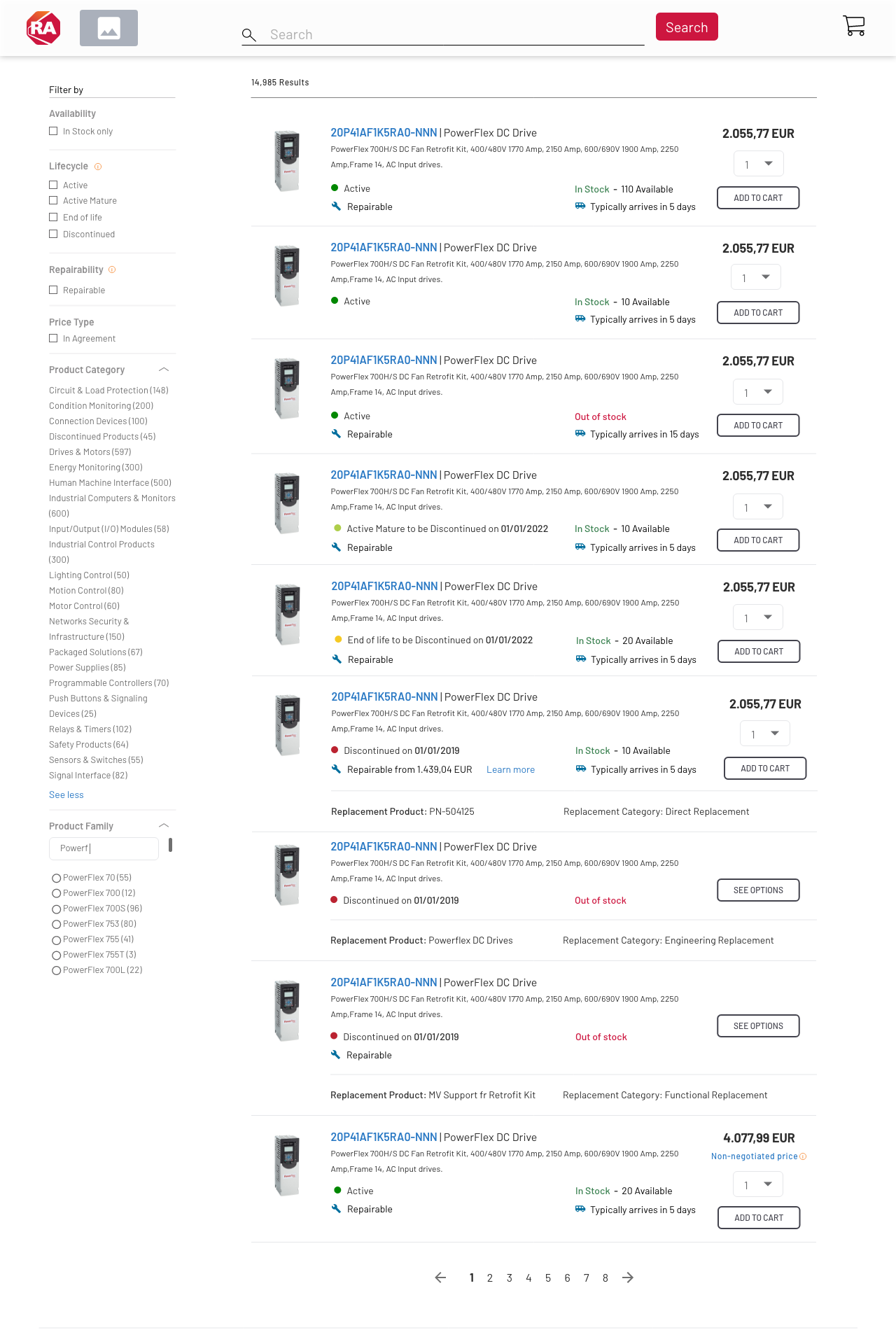
We had to decide whether to match competitors UX patterns or adapt patterns for enterprise constraints. We chose to adopt familiar e-commerce patterns (search, filtering, sorting, product detail pages, checkout flow, product recommendations) while adding B2B features.
How I helped stakeholders
Presented synthesized research findings in stakeholder sessions, using real user quotes to shift priorities.
Raised UX pain points in team ceremonies and advocated for user-centered prioritization.
Tied recommendations to business value—framing Repair Services as a revenue opportunity, not just a user request
Leadership and process innovation
Design pattern library
Built a design pattern library using Rockwell's design system, improving design consistency across the platform and accelerating time-to-market for new features. This created a shared language between designers and developers.
Design versioning system
Implemented a versioning system that helped developers and designers track project iterations and understand the rationale behind design, product, and business decisions. This reduced confusion during handoff and preserved institutional knowledge.
Research repository and knowledge sharing
Created and maintained UX repositories with research insights and design assets, enabling other internal teams at Rockwell to leverage learnings. This extended the value of research beyond the immediate project.
Cross-functional collaboration
Collaborated daily with a team of 20—including 2 designers, 10 developers, 3 product owners, and 5 client stakeholders—to align UX strategy with business and technical goals. Proposed and implemented design onboarding documentation, naming conventions, and workflow standards.
Design scope
End-to-end ownership of core e-commerce experiences:
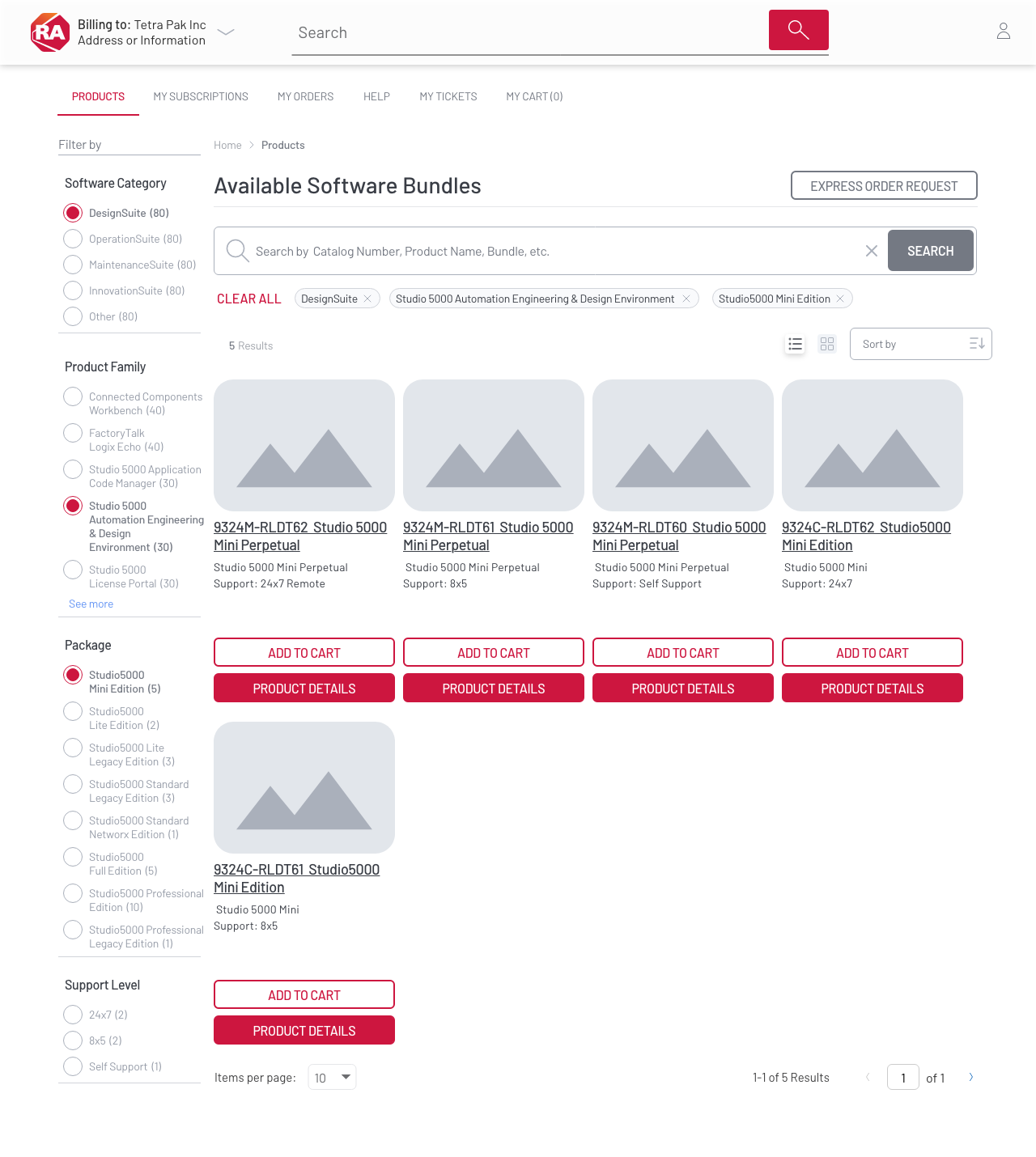
Product search and filtering
Product detail pages
Checkout flow
Repair Services feature (new)
Product upselling and cross-selling (complementary, related and recommended products)
The solution
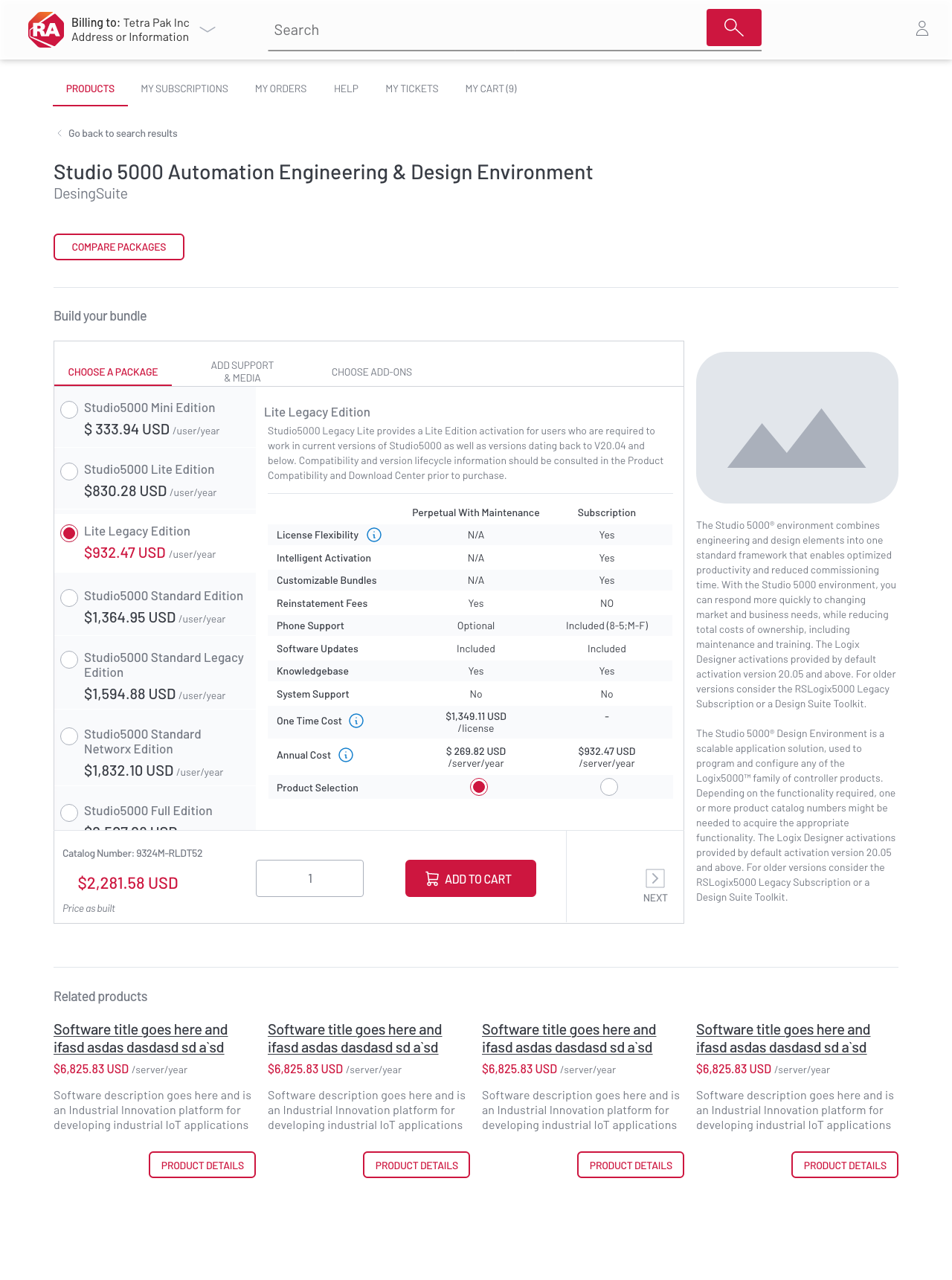
We designed the search experience to mirror competitors layouts because users explicitly referenced it as part of their mental model. But we added enterprise-specific filters (comparability, compatibility, certifications, b2b pricing, product technical specifications and learning materials) that e-commerce consumers don’t need.
Research-Driven Design
I led qualitative research activities that became the foundation for both MVP development and future scalability:
Created moderator guides, conducted stakeholder and user interviews and performed synthesis (affinity maps, executive summaries)
Built an insights database via coded transcripts and affinity maps
Presented synthesized findings in stakeholder sessions to help guiding roadmap priorities
Developed and executed usability testing with user tasks
Delivered actionable recommendations tied to business value and user behavior.
Advocated for UX best practices, benchmark, and proposed to expand or add new features (e.g., guided selling, chatbot, upsell and cross-sell modules)
Wireframing & Prototyping
Created detailed wireframes with annotations for interaction and behavior.
Designed interactive prototypes to support usability testing and developer teams.
Proposed and applied a version control system to track changes across iterations
Collaborated with cross-functional teams to evaluate technical constraints and performance trade-offs
Disclaimer: In my role as a UX consultant under NDA agreements, I'm limited in how much I can visually disclose.
While I can't show full-resolution designs or detailed project visuals, I’ve highlighted key insights and outcomes to showcase my thinking and contributions.
Reflections and learnings
What worked
Grounding every recommendation in user research made it easier to shift stakeholder priorities.
Framing the Amazon comparison early set the right expectations for UX quality.
Investing in systems (pattern library, versioning, repositories) paid dividends beyond the project timeline.
What I'd do differently
I would have pushed for more direct access to end users earlier in the process. Some of our initial assumptions came from stakeholder proxies, and we lost time validating things users could have told us directly in an earlier stage.
How this shaped my growth
This project deepened my expertise in qualitative research and showed me the power of research as a persuasion tool—not just an input to design, but a way to shift organizational priorities. It reinforced that UX work is about building systems and influence, not just shipping features.