Realogy: Intelligent Apps
Embedded as a UX consultant via Globant
Accelerated concept to prototype delivery by introducing Lean UX, shipping 23 proof-of-concepts within 15 months, with 4 advancing to MVP to support real state agents.
Role: Lead UX Designer | Duration: 15 months | Team: Distributed (4 people)
23
Proof-of-concept prototypes delivered in under 15 months
4 MVPs
Launched and adopted by agents in initial versions
Lean UX
Framework introduced, and embedded in client workflow
The problem
Business context
Realogy, a leading U.S. residential real estate services provider, sought to leverage the power of data science by embedding predictive models into intelligent applications.
User pain point
Real estate agents needed data-driven tools to identify leads, forecast property sales, and create listings more efficiently. But they had no access to the predictive capabilities the company was building.
Goal
Support users, agents, brokers, and business teams in identifying new market opportunities and assessing risks with data-backed insights.
Strategic approach
Key constraints
Distributed team across India and Colombia with time zone challenges.
Data science models existed but had never been translated into user-facing products.
Need to validate many concepts quickly without heavy engineering investment.
Trade-offs and decisions
We chose breadth over depth—building 23 concepts rather than perfecting a few of them—because the client needed to understand which predictive models had real product potential before committing engineering resources.
How I helped stakeholders
Introduced Lean UX and Design Sprint methodologies to accelerate decision making.
Facilitated cross-functional workshops with data science teams to translate models into product features.
Created shared language between data scientists, product managers, and engineers.
Methods and rationale
Lean UX and rapid prototyping: Chose this approach specifically to reduce wasted development effort and pivot quickly when concepts underperformed. This enabled delivery of 23 prototypes within 15 months.
Material design system: Material Design System: Applied Google Material Design guidelines to accelerate development handoff and ensure mobile-first consistency.
The solution
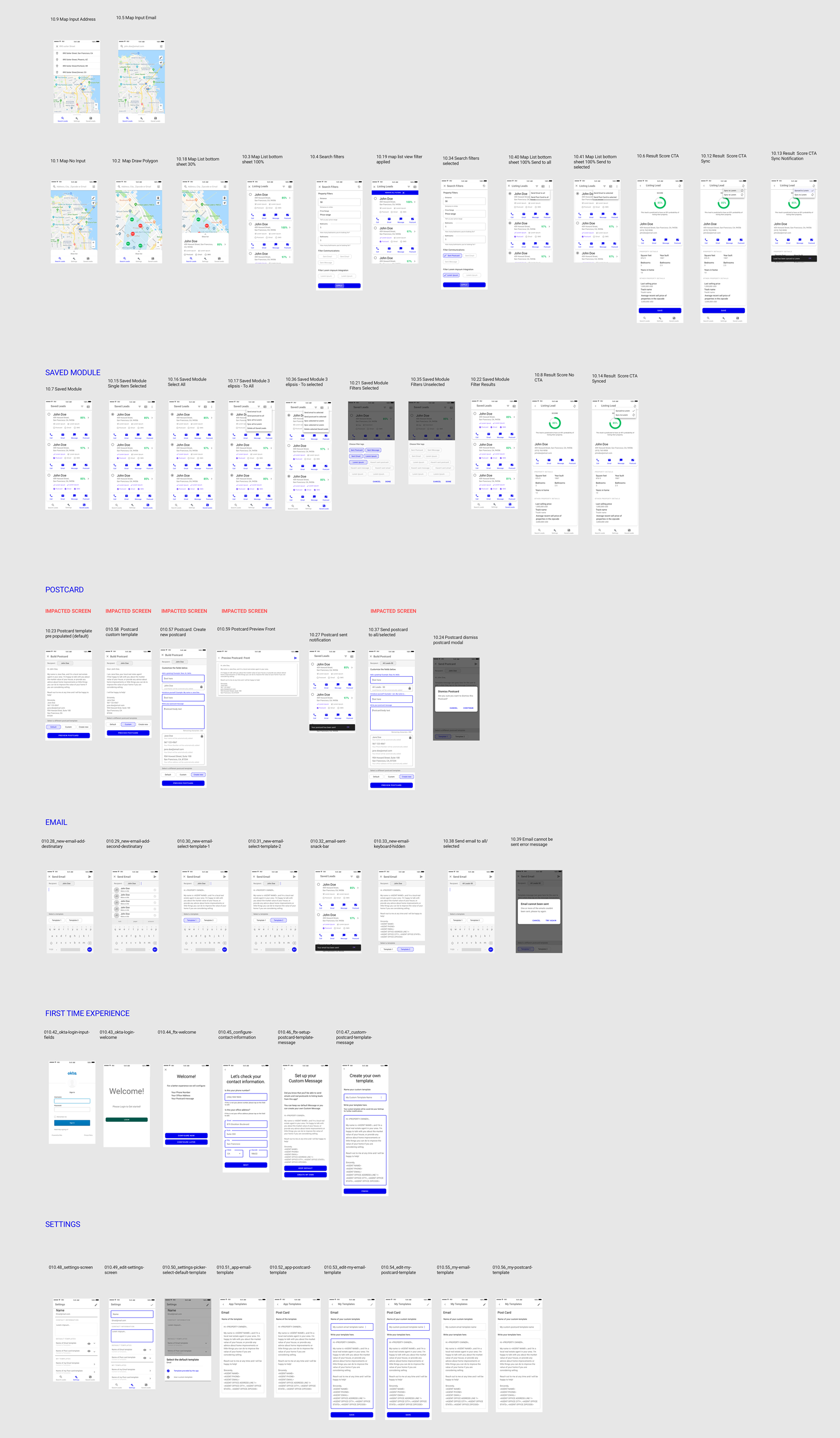
Designed 23 mobile proof-of-concepts using predictive data models, including:
Lead Conversion Predictor: Helped agents prioritize outreach based on likelihood to convert.
Property Sales Forecasting: Gave agents visibility into market timing and pricing recommendations.
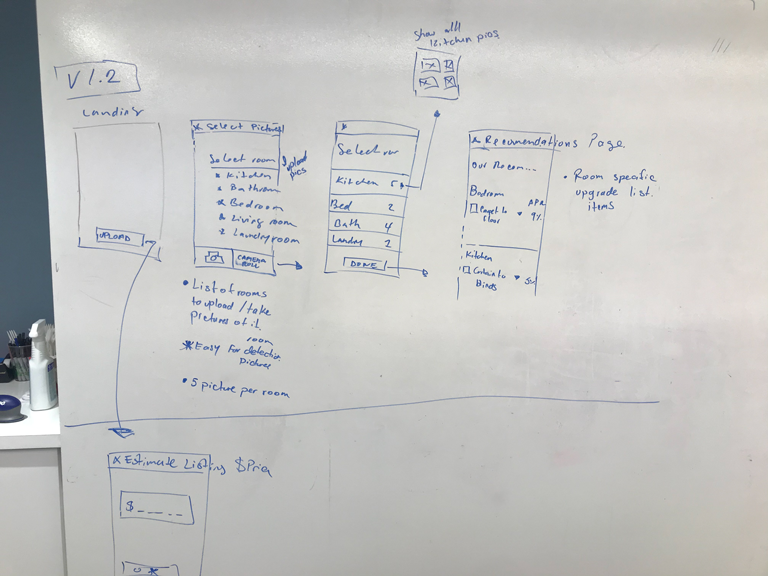
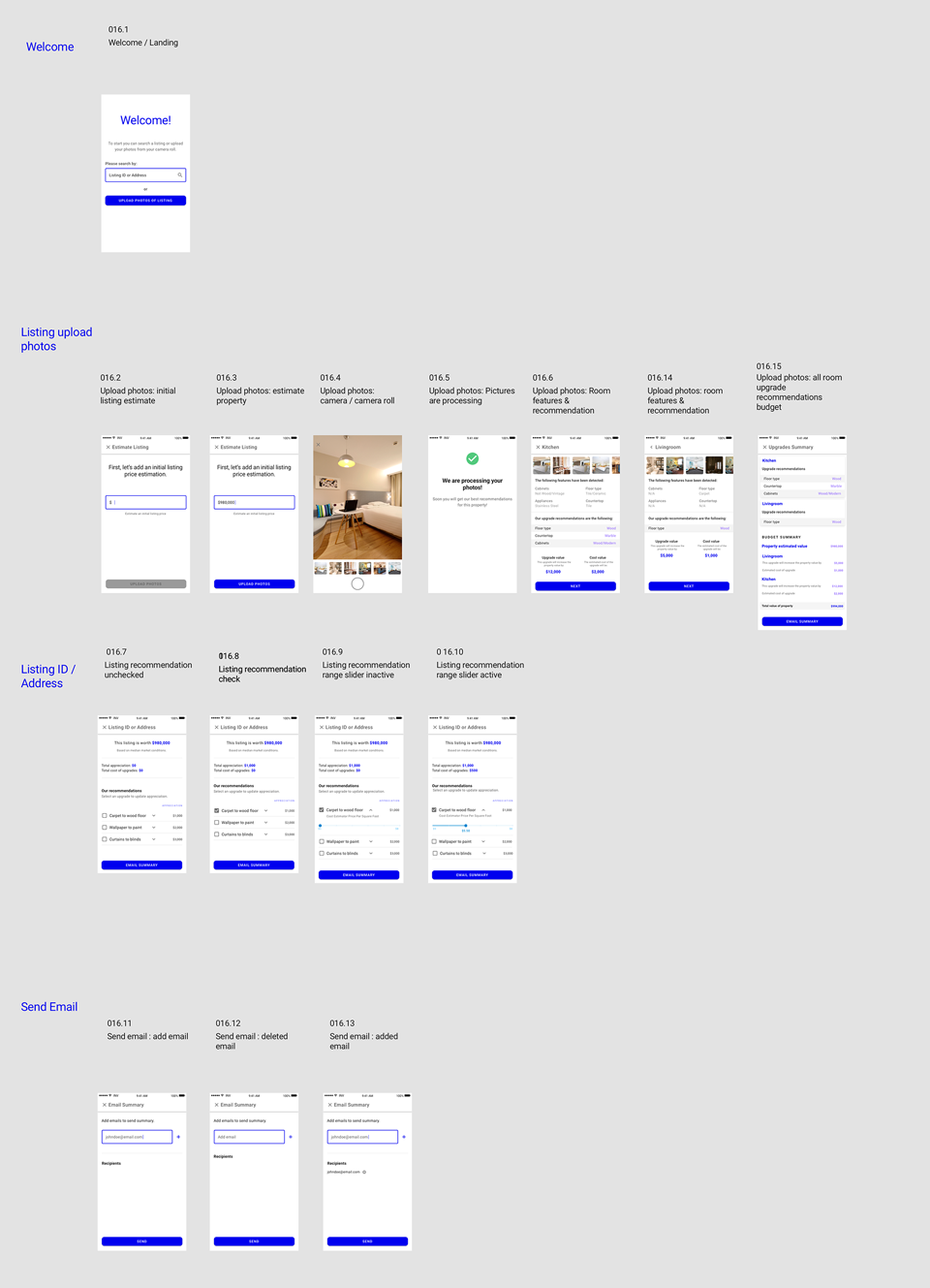
AI-Assisted Listing Creation: Streamlined the listing process with intelligent auto-fill and suggestions.
Risk Analysis Dashboard: Enabled brokers to assess portfolio risk and market exposure
Discovery & alignment
The challenge wasn't design. It was translation.
Realogy's data science team had powerful predictive models but no way to turn them into something a real estate agent could actually use. I faciliated a workshop format to bridge that gap: bring the data scientists into the room, unpack what each model actually outputs, then pressure test it against real agent behavior. Would they trust it? Would they act on it? Does it fit into their day?
Those sessions changed the roadmap. We discovered features we hadn't planned for and killed others that were technically impressive but practically useless.
I partnered closely with data science, product, and engineering stakeholders to:
Understand the core capabilities and business value of the predictive models.
Define product goals, understand technical constraints, and user expectations for real estate professionals.
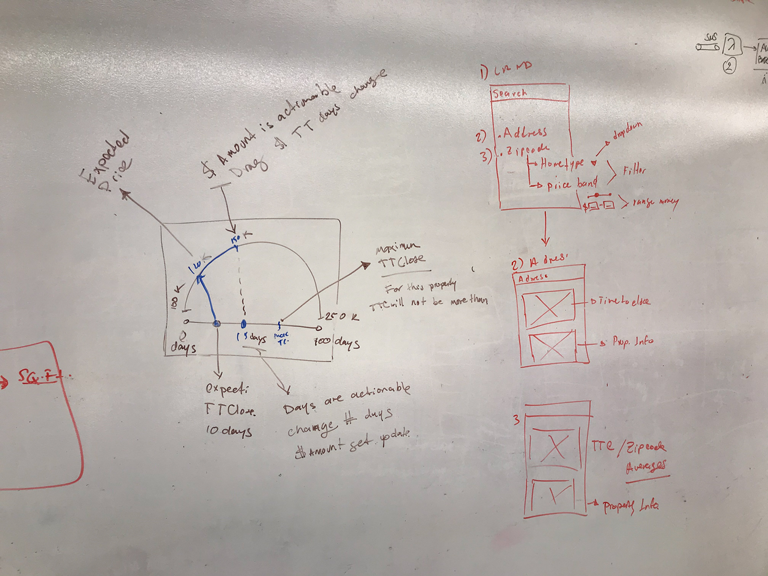
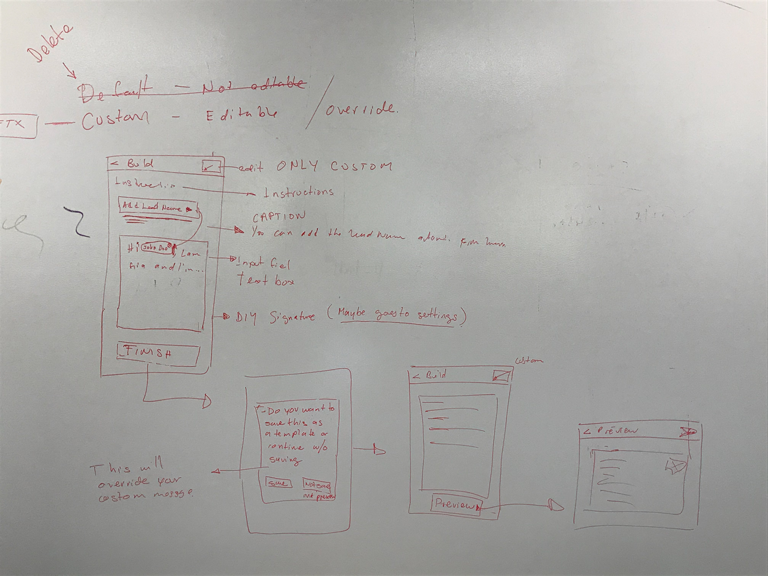
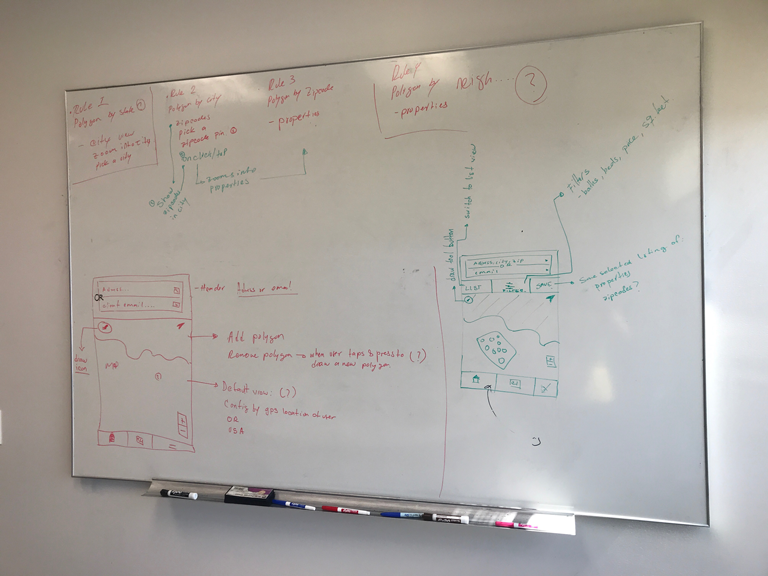
Initiate collaborative whiteboard sessions to uncover the functional potential of the models.
Ideation & concept development
Working in lean ux iterative cycles, I facilitated ideation sessions to translate abstract data capabilities into tangible product concepts. These included:
Predictive market insights
Risk analysis dashboards
Agent performance forecasting tools
Opportunity scoring interfaces
Prototyping & interaction design
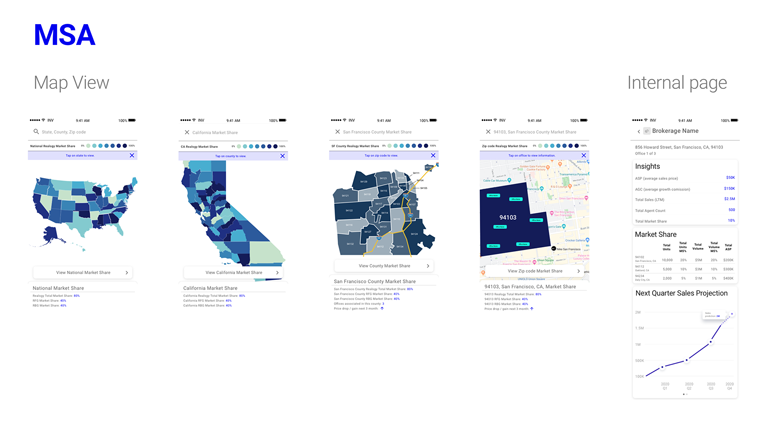
I designed a range of low and mid-fi wireframes, delivered interactive prototypes, and interfaces that explored data interaction, mobile-first behaviors, and cross-platform viability.
Applied Google Material Design guidelines to accelerate development readiness.
Defined interaction patterns, behavior guidelines, and accessibility standards.
Integrated data visualization techniques for clear and meaningful storytelling.
Disclaimer: In my role as a UX consultant under NDA agreements, I'm limited in how much I can visually disclose.
While I can't show full-resolution designs or detailed project visuals, I’ve highlighted key insights and outcomes to showcase my thinking and contributions.

Leadership and influence
Distributed team leadership
Led a team of 4 across India and Colombia, managing delivery timelines and client coordination across time zones. Established rituals and documentation practices that kept the team aligned despite 10+ hour time differences.
Process innovation
Introduced Lean UX and Design Sprint methodologies that reduced the concept-to-prototype cycle significantly. These practices were adopted by the client and shaped their future product development workflows.
Cross-functional bridge
Created workshops that brought data scientists and product teams together for the first time. Translated complex predictive model capabilities into plain-language product opportunities that non-technical stakeholders could evaluate and prioritize.
Reflections and learnings
What worked
Lean UX approach enabled rapid validation without heavy engineering investment.
Cross-functional workshops broke down silos between data science and product teams.
Rapid explorations helped the client understand which models had real product potential
What I’d do differently
I would have pushed harder for direct agent research earlier. We relied heavily on stakeholder assumptions which led to some concepts that missed the mark.
How this shaped my growth
This project taught me how to operate as a UX leader in ambiguity—bridging data science and product teams, making fast decisions with incomplete information, and building processes that outlast individual projects. It reinforced that design work is less about pixel-perfect screens and more about creating clarity from chaos.